
6 min read · Updated 2026-10-18
In short
Families stay when they can see what their child is doing and feel they can reach the centre. Send a short note after every lesson, a fuller progress update each term, reply within a working day, keep one main channel, and tell families about changes before they happen. Handle a complaint quickly, in person or on the phone, and write down what you agreed.
"I'm paying every week and I honestly can't tell you what he's doing in there." Most families who leave a tutoring centre say something like that first, usually to the admin at the front desk, often in week six of a term. They rarely leave over one bad lesson. They leave because the fees went out and nothing came back to show what the money was buying. A parent who reads two lines after each lesson, and a fuller picture each term, rarely has that doubt. Good communication is not marketing. It is evidence that the lessons are working.
- What was covered
Name the skill, not just the topic.
- One thing done well
Specific enough that the parent can repeat it.
- One thing to practise
Raised gently and early.
- Homework
What it is and when it is due.
A note after every lesson
Two to four sentences, written by the tutor straight after the lesson, while it is fresh. Keep it specific: "worked through simultaneous equations by elimination and got the last three right without help" tells a parent far more than "great lesson today".
- Write it for the parent, not the child's file. No shorthand, no marks without context.
- Mention homework and when it is due, so the family can help.
- Raise a worry gently and early. "Fractions are still shaky, we will spend next week on them" prevents a surprised parent at the end of term.
- Send it the same day. A note three days late reads as an afterthought.
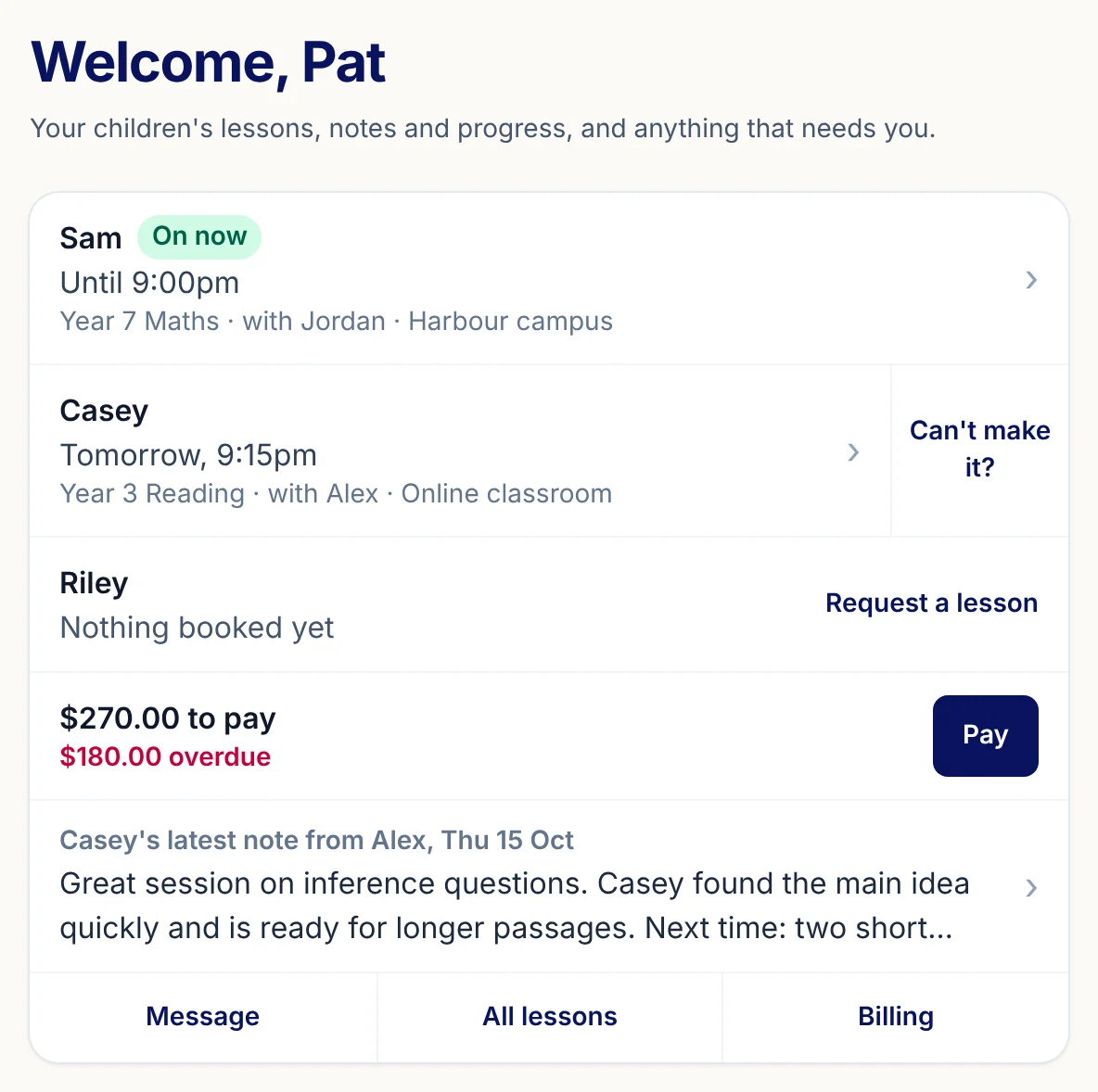
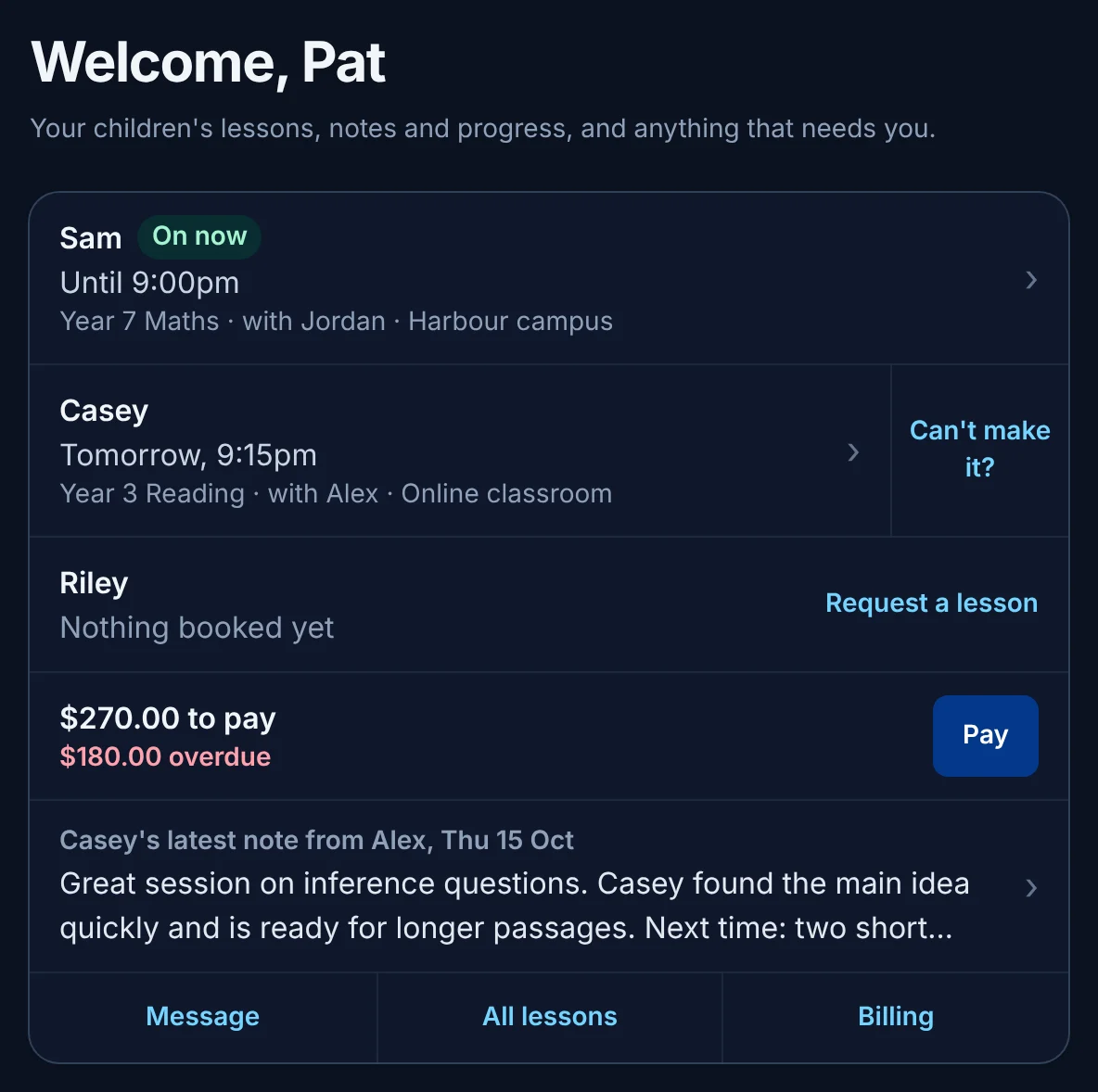
The honest reason notes do not get written is that the tutor has three minutes before the next student and is typing on a phone. XTutio's lesson wrap-up takes the tutor's quick jottings and drafts the notes, the parent update and the homework together, and the tutor checks and saves them in one tap, so nothing is typed twice. A sentence with a figure that is not in the lesson's record is taken out of the draft. The update then shows on the parent's home in the parent app, and the homework appears on the family's homework page with its due date.
Progress each term
Once a term, step back. Where did the child start, what have they covered, what can they now do on their own, and what comes next? Tie it to what the family said they wanted when they enrolled. If they came for a particular exam, say how preparation is tracking. A centre that plans its year around the school terms finds this easy to time; see planning around the NSW school year.
Offer a short call or meeting to any family that wants one, and make sure every family whose child is struggling gets one whether they ask or not.
Reply quickly, from one place
Decide what your centre promises and keep to it. A reply within one working day, even if it only says "we are checking with the tutor and will come back to you tomorrow", is better than a perfect answer a week later. Pick one main channel for families to reach you, publish it, and make sure more than one person can see it. A message that sits on a tutor's personal phone, or in one person's inbox while they are on leave, is how a small question becomes a complaint.
- Use one main email address and one centre phone number, both on every invoice and email.
- Keep a short set of saved replies for the questions you answer every week: how to reschedule, how billing works, holiday dates.
- When a tutor gets a message meant for the centre, it is passed on, not answered privately.
XTutio's mailbox has a Needs reply view that lists every conversation where a family wrote last and nobody has answered, oldest first, with how long each has waited. Templates can be a person's own or shared across the centre, so the reschedule answer reads the same whoever sends it. See operations for the front desk side.
Tell families about change before it happens
A new tutor, a moved lesson, a price change, a closure, a new campus: tell the family before it happens, in plain words, with what it means for them and who to ask. Give the reason where you can. A family told in advance that their child's tutor is leaving at the end of term, and introduced to the new one, usually stays. A family that finds out at the door often does not.
Price changes deserve the most notice. Say what changes, from when, and why. Messages like these are operational rather than promotional, so keep offers out of them; emailing and texting families explains why the difference matters. In XTutio, a closure or a run of cancelled lessons goes out through Broadcast as an operational notice, so it still reaches families who opted out of promotions, and when staff move a lesson on the calendar, the family hears only if staff tick "Email the family about the new time". Nobody gets a surprise email about a change still being sorted out.
Handling a complaint
- Acknowledge it the same day, even if you cannot answer it yet.
- Move it to a call or a meeting. Tone is lost in writing, and most complaints soften once someone listens.
- Find out what happened from the tutor before you promise anything.
- Agree what will happen next and by when, then write it down and send it to the family.
- Follow up after the next lesson to check it worked.
A concern about a child's safety, or about a member of staff's conduct with a child, is not a customer complaint. It goes to your centre's safety lead under your child safety procedures straight away.
A weekly checklist
- Every lesson this week has a note to the family
- Every family message has had a reply within one working day
- Families whose child is struggling have been offered a call
- Any change next week (tutor, time, closure) has been told to the families affected
- Complaints from last week have had their follow-up
Questions centres ask
- How often should a tutoring centre update parents?
- A short note after every lesson and a fuller progress update each term works for most families. Families whose child is struggling should also be offered a call.
- What should a lesson note to parents include?
- What was covered, one thing the child did well, one thing to practise and any homework with its due date. Two to four specific sentences, sent the same day, are enough.
- How fast should a tutoring centre reply to parents?
- Within one working day is a promise most centres can keep. A quick reply saying when you will have the answer is better than a full answer days later.
